Birding by Ears 🦜

Reimagining Birding Through Accessible Design and Community Support

My ROLE
UX Researcher

I led and supported user research by recruiting and interviewing 12 subject matter experts and participants with visual impairments, and facilitating co-design sessions. I contributed to prototyping an audio-based app and conducted user testing with SMEs. In partnership with a birding organization, I translated generative insights into actionable recommendations that informed website accessibility improvements.

FOr

Usability & User Research class @UW

Duration

Fall 2025

Scope

Accessibility, Vibe Coding, Desk Research, Generative Research, User Testing

Team

Winnie Cheng,

Katarina Blind,

Charlotte Truong

Impacts We've Made

Making Accessibility Information Visible

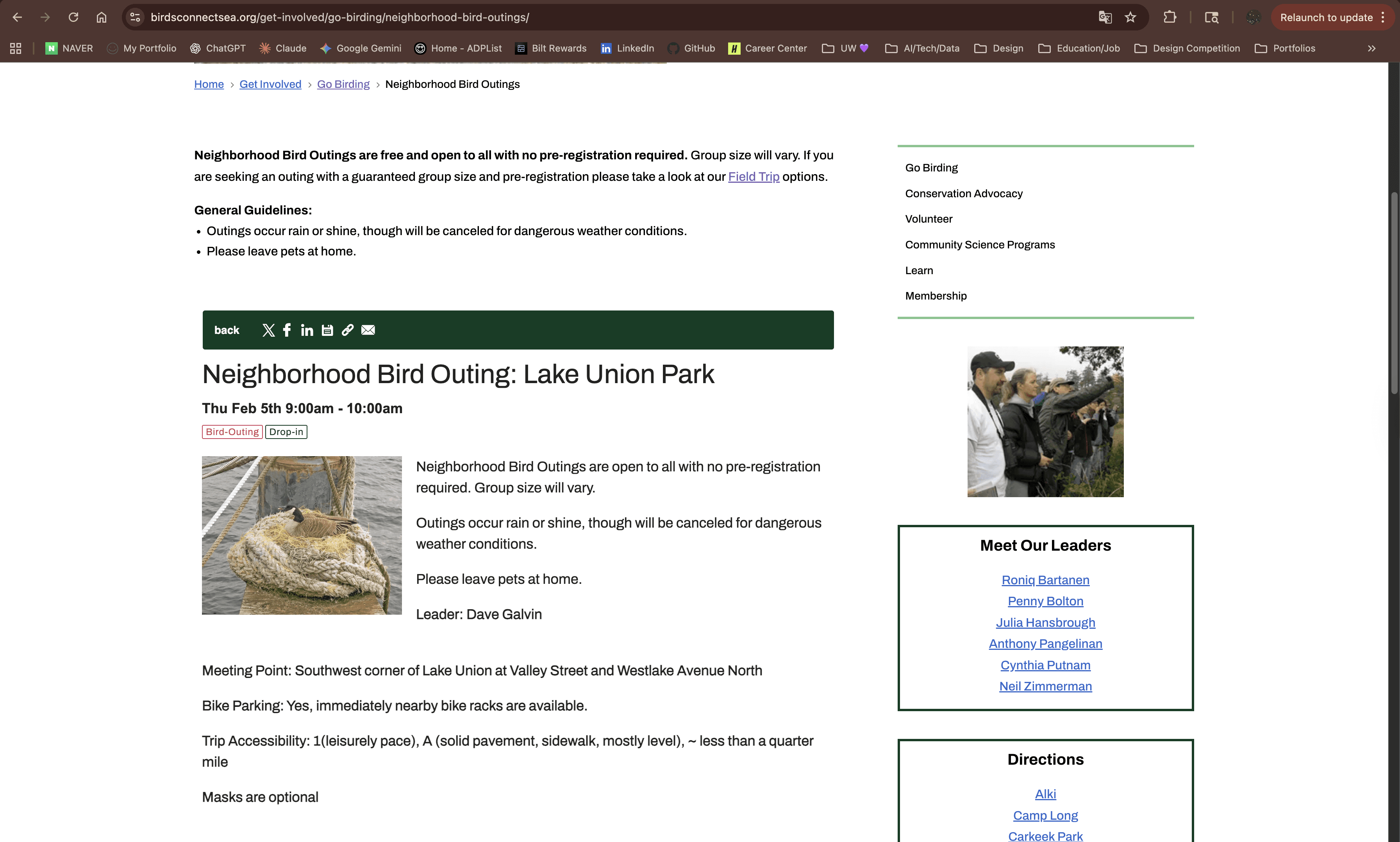
As a result, the Birds Connect Seattle organization added a trip accessibility section to each event, helping users with visual impairments better understand trail accessibility.

Impacts We've Made

Making Accessibility Information Visible

As a result, the Birds Connect Seattle organization added a trip accessibility section to each event, helping users with visual impairments better understand trail accessibility.

Try our prototype

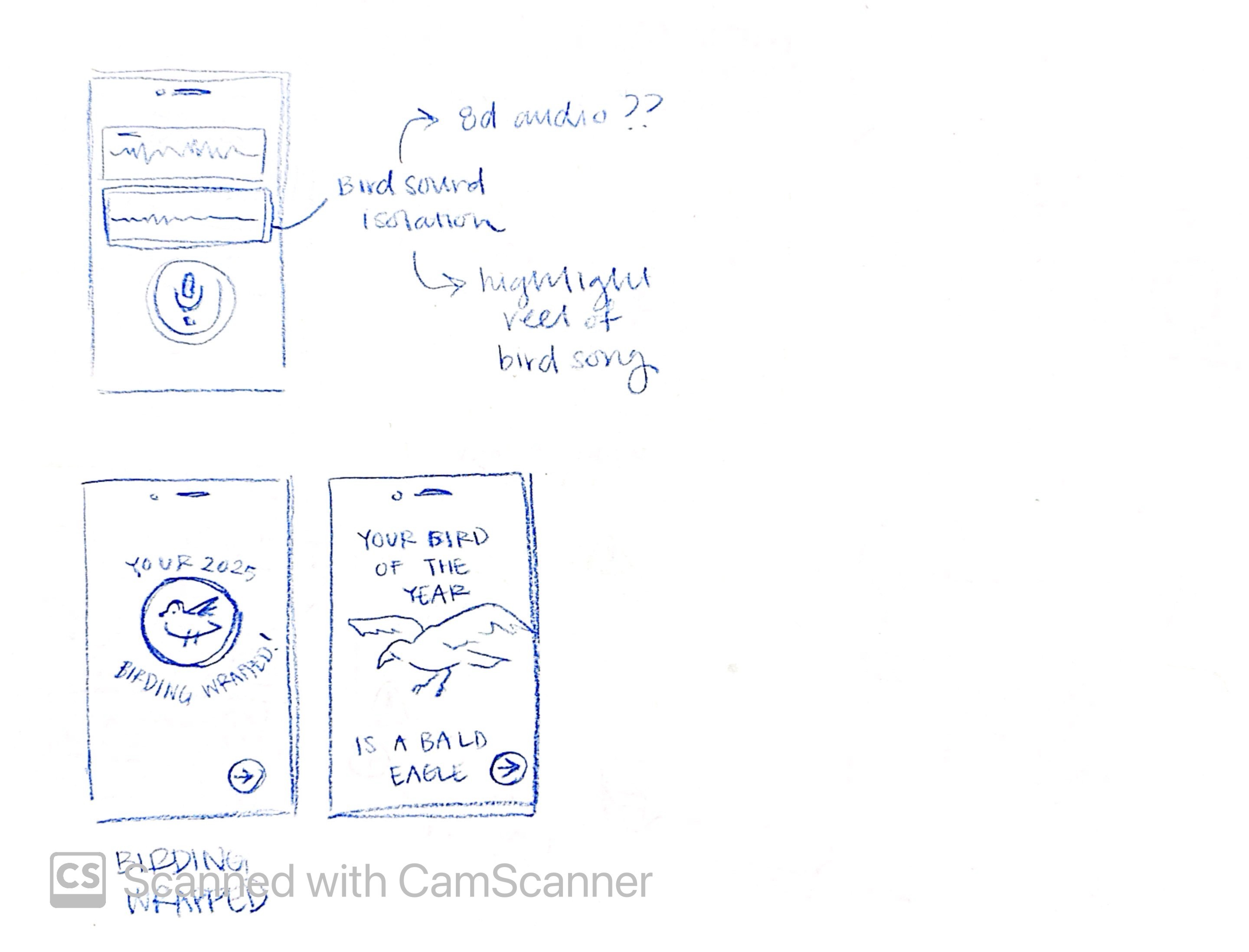
Tap the sound button to receive an AI-generated audio highlight from your trip of the day.

Project Background

Approach accessibility not by fixing limits, but expanding enjoyment

Approach accessibility not by fixing limits, but expanding enjoyment

We were inspired when our program director mentioned being an avid birder; although none of our team members had prior experience with birding, we found it to be an intriguing opportunity to explore accessibility through a new lens.

Michael Carter craft strategic design

The Problem

Birders with visual impairments are often excluded from shared birding experiences and face challenges participating in the same ways as sighted birders.

The Challenge

How might we evolve birding culture so that the insights and experiences of birders with visual impairments enrich the community as a shared source of learning, inspiration, and belonging?
Michael Carter craft strategic design
  1. Research Process

  1. Research Process

Why I conducted this project and why is it important?

Why I conducted this project and why is it important?

Research Questions

  1. What are the main motivations for birding?
  2. What are the emotional benefits of birding?
  3. What is the birding experience for people with visual impairments?
  4. What barriers and opportunities exist within birding in general? 
  5. What additional perspectives can birders with sight impairments provide?
Design a self-tracking app tailored for individuals with ADHD, combining reliable information, holistic management tools, and personalized support to help users take control of their symptoms and thrive with confidence.
Desk Research/ Literature Review & BenchMarking

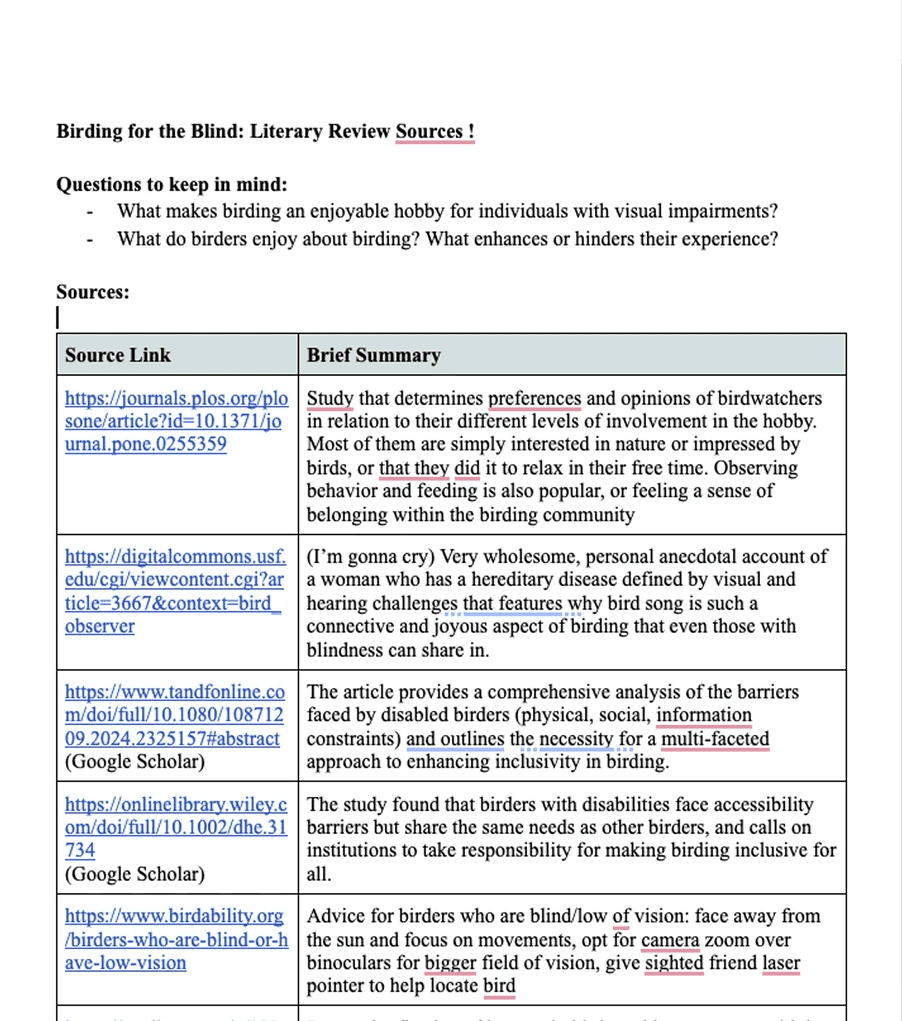
Top 3 Findings from Desk Research

Top 3 Findings from Desk Research

Birding by Ears

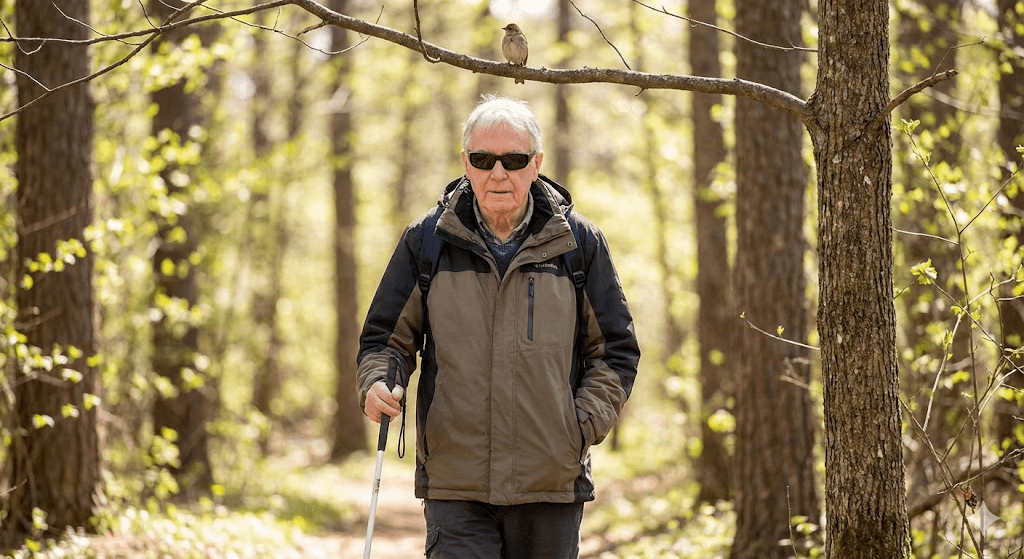
“I feel … no particular loss at not being able to see most birds anymore. It is the song that now gives me immense joy and connects me to the birds that I love.”
-Martha Steele (birder with retinitis pigmentosa)

Birding by Ears

“I feel … no particular loss at not being able to see most birds anymore. It is the song that now gives me immense joy and connects me to the birds that I love.”
-Martha Steele (birder with retinitis pigmentosa)

This challenges the assumption that birding relies solely on sight and highlights the need to design multi-sensory experiences that celebrate diverse ways of experiencing birds.

This challenges the assumption that birding relies solely on sight and highlights the need to design multi-sensory experiences that celebrate diverse ways of experiencing birds.

Barriers in Birding

People with disabilities face physical, social, and structural barriers, including distance, lack of equipment, safety concerns, and limited social support that prevent full participation.

Barriers in Birding

People with disabilities face physical, social, and structural barriers, including distance, lack of equipment, safety concerns, and limited social support that prevent full participation.

Addressing these constraints is important to reimagining birding as an accessible and empowering activity, enabling people with visual impairments to reconnect with the natural world.

Addressing these constraints is important to reimagining birding as an accessible and empowering activity, enabling people with visual impairments to reconnect with the natural world.

Lack of Digital Accessibility

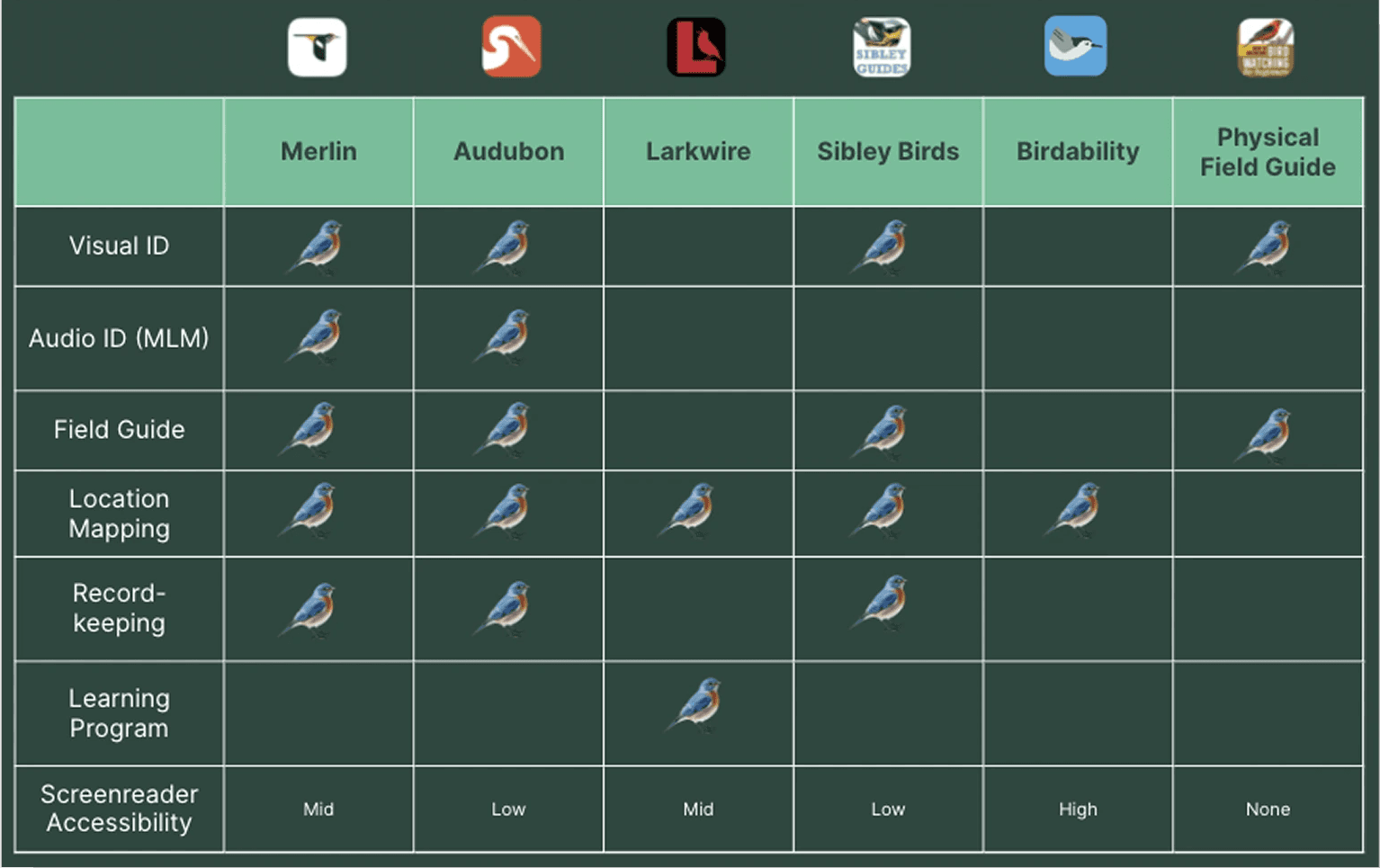
During benchmarking of existing birding apps, including the major app Merlin ID, we found that most platforms lack proper screen reader support and have poor visual readability due to small fonts and low contrast.

Lack of Digital Accessibility

During benchmarking of existing birding apps, including the major app Merlin ID, we found that most platforms lack proper screen reader support and have poor visual readability due to small fonts and low contrast.

These accessibility gaps exclude users with VI from engaging in birding activities. Improving digital accessibility can make birding apps more inclusive and equitable.


These accessibility gaps exclude users with VI from engaging in birding activities. Improving digital accessibility can make birding apps more inclusive and equitable.


Michael Carter craft strategic design
Generative Research/ Field ethnography

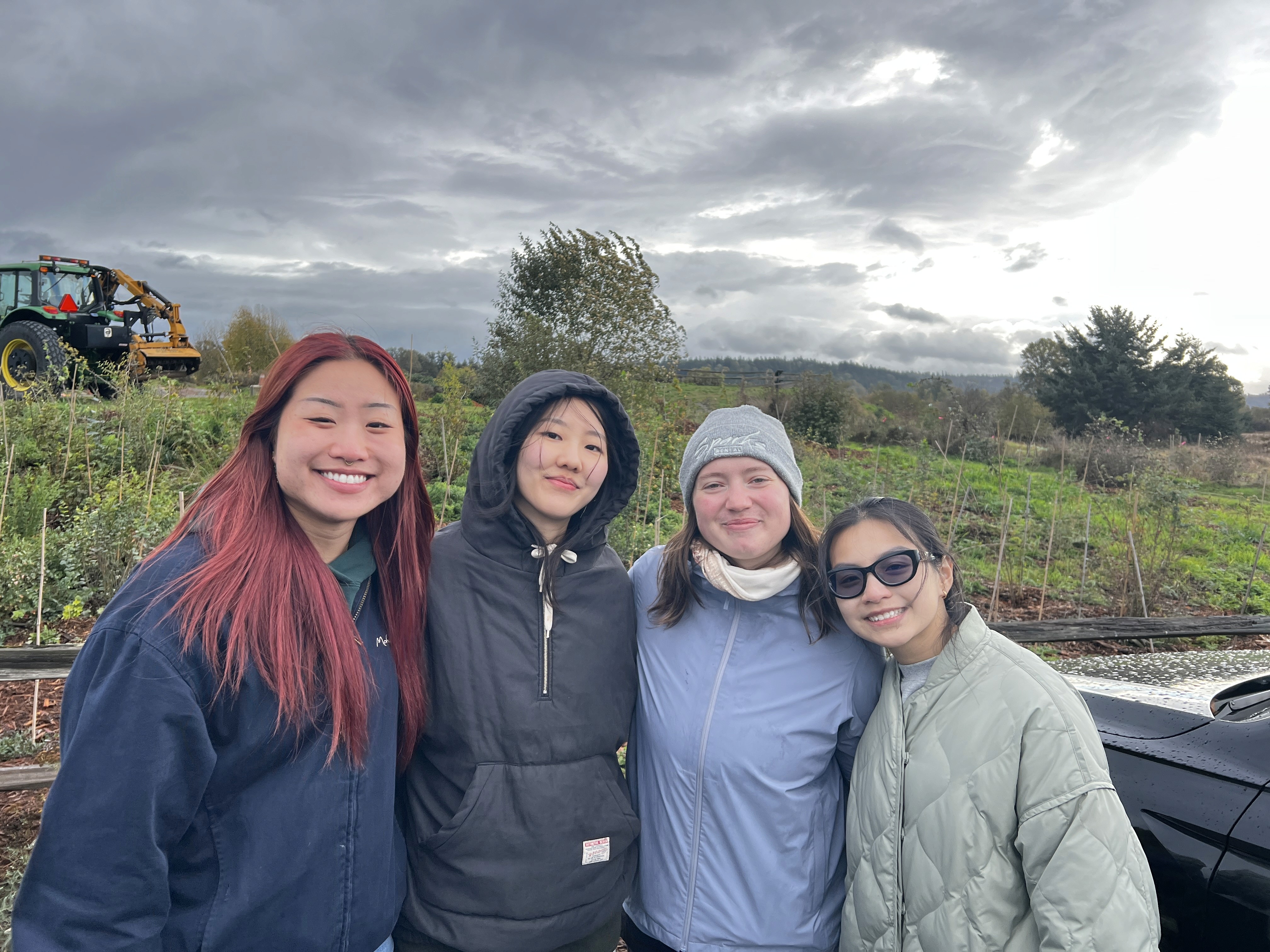
Firsthand Birding Experience

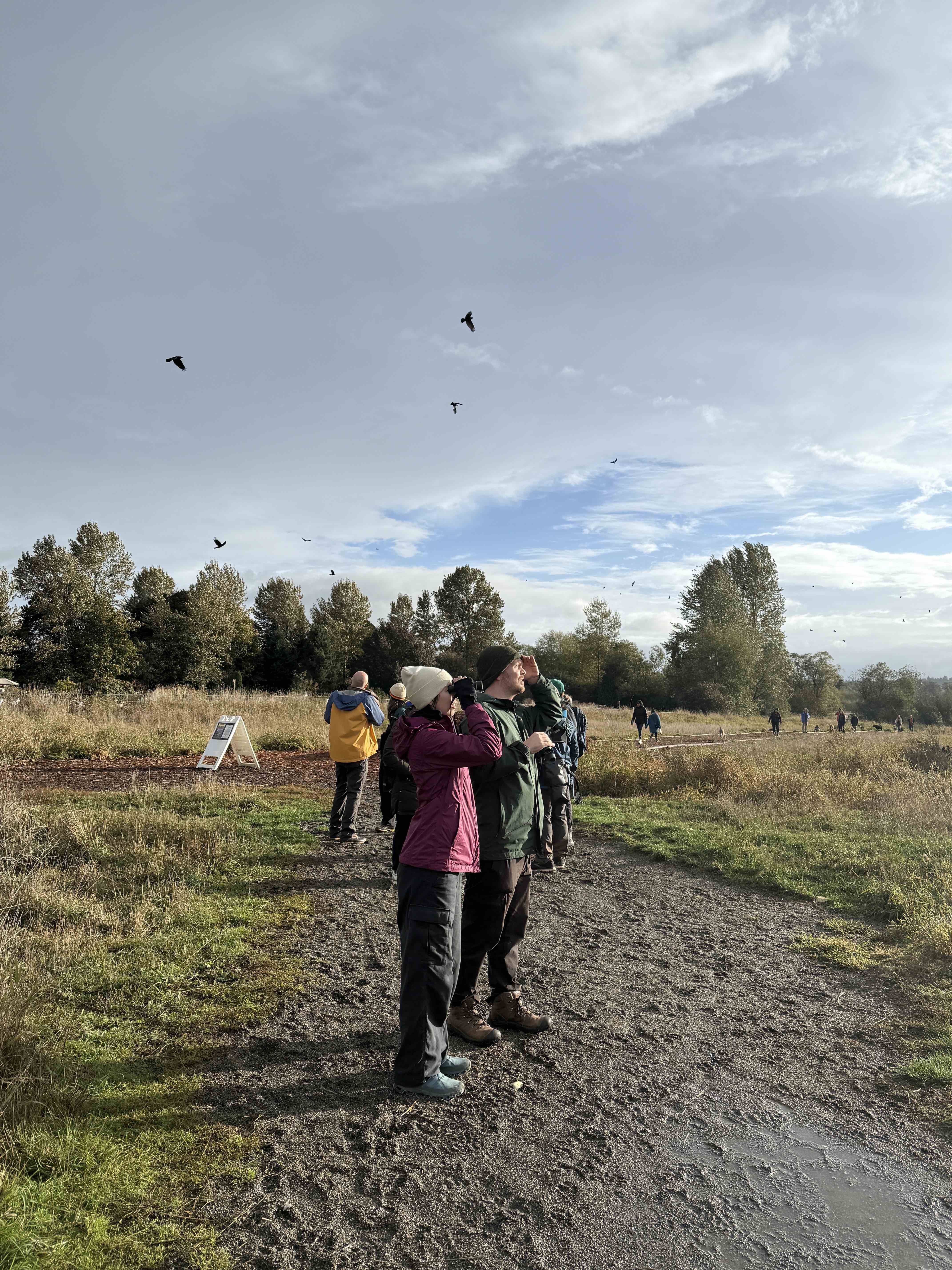
I participated in a two-hour field research session guided by Birds Connect Seattle to gain firsthand experience with birding and develop foundational knowledge by engaging with people deeply involved in the practice.

📍Bellevue, washington
Michael Carter craft strategic design
Generative Research/ SME Interview

3 People with Visual Impairments +
5 People without VI

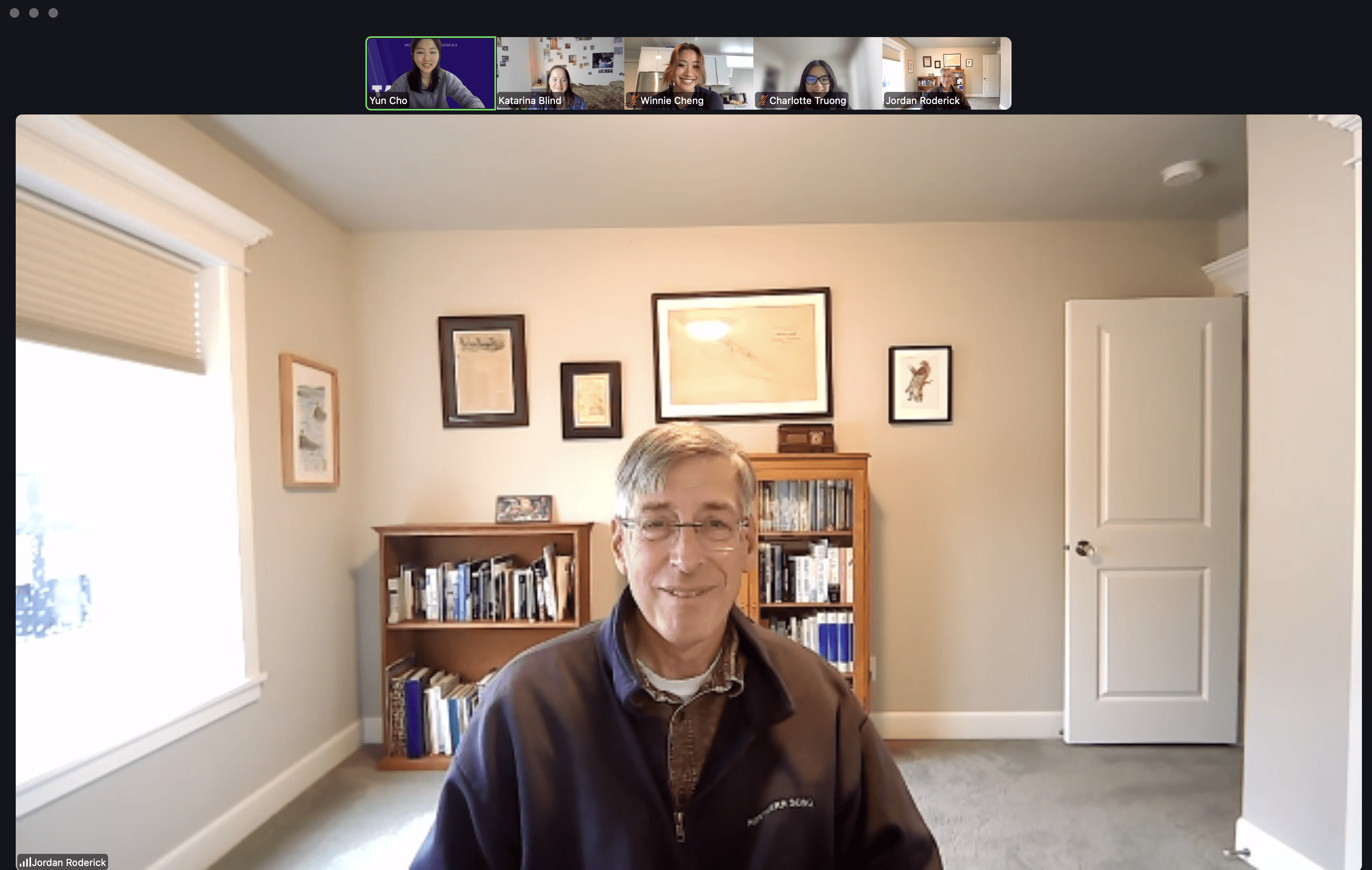
We conducted interviews with three individuals with visual impairments recruited through an online article and the Birdability organization. The goal was to ground our work in lived experience rather than assumptions, allowing us to uncover accessibility barriers and opportunities that informed inclusive design directions for birding experiences.

Generative Research/ Data Analysis

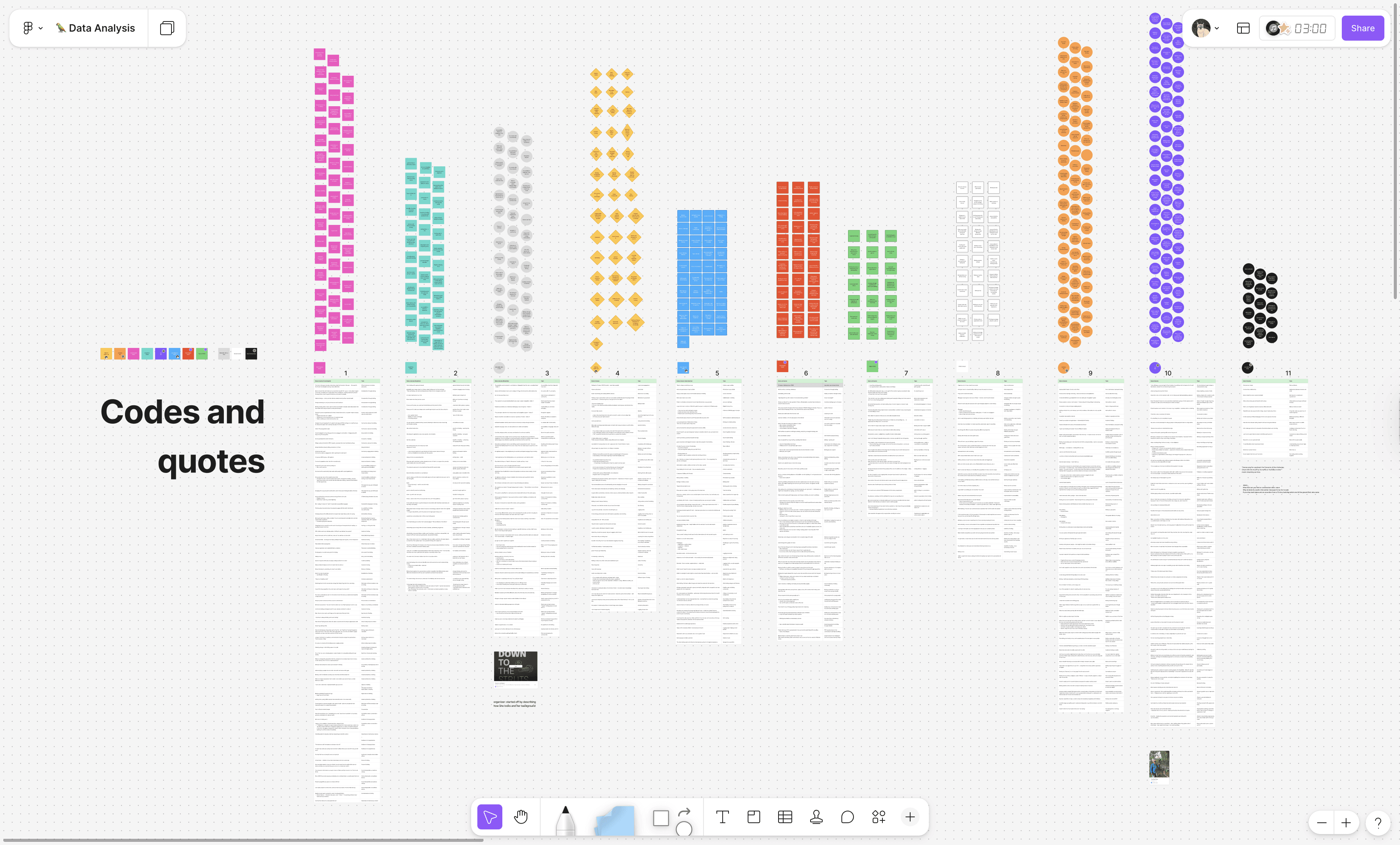
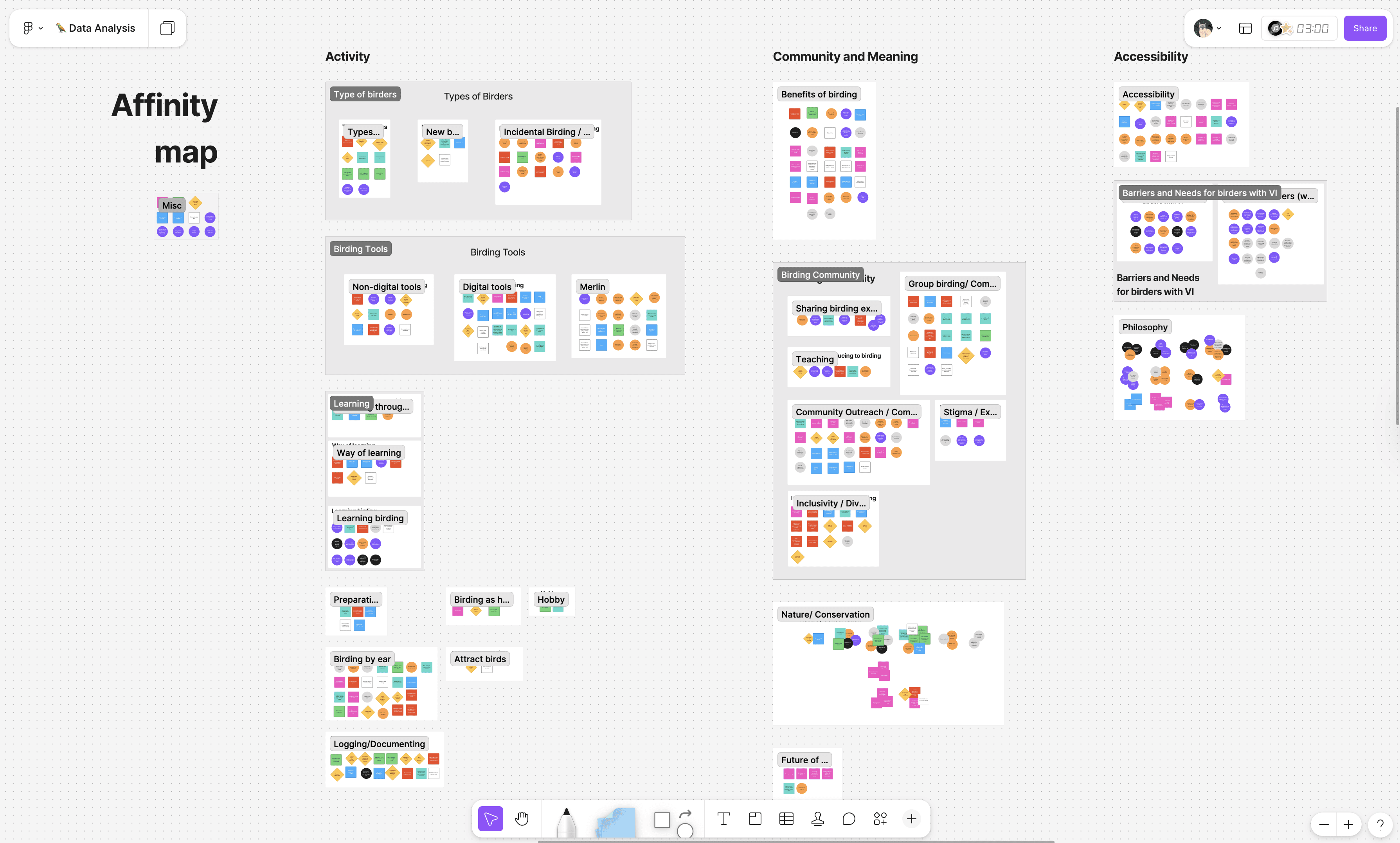
Finding Common Themes

Through coding and affinity mapping, we synthesized research data into key themes centered on exclusivity within the birding community, challenges in guidance and support, and learning through birding.
Generative Research/ Overview

Top 3 Findings from SME Interviews

Top 3 Findings from SME Interviews

Finding Community

“I want the birding community to be more open to assisting people with disabilities to go birding.”
- J (SME)
We found that birders with visual impairments often struggle to find local communities or companions for birding.

Finding Community

“I want the birding community to be more open to assisting people with disabilities to go birding.”
- J (SME)
We found that birders with visual impairments often struggle to find local communities or companions for birding.

For safety, birders with visual impairments often need guides to accompany them. This finding highlights the importance of improving accessibility and support systems within the birding community to ensure inclusive participation.

For safety, birders with visual impairments often need guides to accompany them. This finding highlights the importance of improving accessibility and support systems within the birding community to ensure inclusive participation.

Misaligned Expectation

A limited understanding of the experiences of birders with visual impairments often prevents sighted birders from offering appropriate support. Many sighted birders also express concern about unintentionally causing discomfort or harm during group birding activities.

Misaligned Expectation

A limited understanding of the experiences of birders with visual impairments often prevents sighted birders from offering appropriate support. Many sighted birders also express concern about unintentionally causing discomfort or harm during group birding activities.

This helped us recognize the importance of building awareness around the needs and experiences of birders with visual impairments, as well as how to guide and support them effectively.

This helped us recognize the importance of building awareness around the needs and experiences of birders with visual impairments, as well as how to guide and support them effectively.

Learning Opportunities

Interviews showed that learning bird calls is a shared interest among both visually impaired and sighted birders, whether through in-field recording or on-site identification.

Learning Opportunities

Interviews showed that learning bird calls is a shared interest among both visually impaired and sighted birders, whether through in-field recording or on-site identification.

This helped us realize that many birders are deeply passionate about lifelong learning, which highlighted the potential value of incorporating more educational features into Merlin app.

This helped us realize that many birders are deeply passionate about lifelong learning, which highlighted the potential value of incorporating more educational features into Merlin app.

design challenge

How can we evolve birding culture to enrich the community as a shared source of learning, inspiration, and belonging?

How can we evolve birding culture to enrich the community as a shared source of learning, inspiration, and belonging?

As a team, we began ideating a range of possible solutions focused on fostering community and accessibility. Rather than reinventing the wheel, we aimed to build on what the birding community is already familiar with.

Evaluative Research/ Co-Design

Who did we talk to and why?

Birds Connect Seattle

Birds Connect Seattle is one of the largest birding organizations in Seattle. We spoke with the leaders we met during our field ethnography and stakeholder interview.

Birds Connect Seattle

Birds Connect Seattle is one of the largest birding organizations in Seattle. We spoke with the leaders we met during our field ethnography and stakeholder interview.

Why we talked to them?
Because they have a large existing network of members and participants, improving their services or website could have a meaningful and scalable impact.

Jay (SME, VI)

We interviewed Jay (SME with visual impairments) from our generative research phase.

Jay (SME, VI)

We interviewed Jay (SME with visual impairments) from our generative research phase.

Why we talked to them?
Jay is a pioneering birder with visual impairment who actively participates in recordings, podcasts, and Birdability speaker sessions. We saw Jay as the closest match to our project’s target persona.

Evaluative Research/ Ideations

Planning Co-Design Sessions

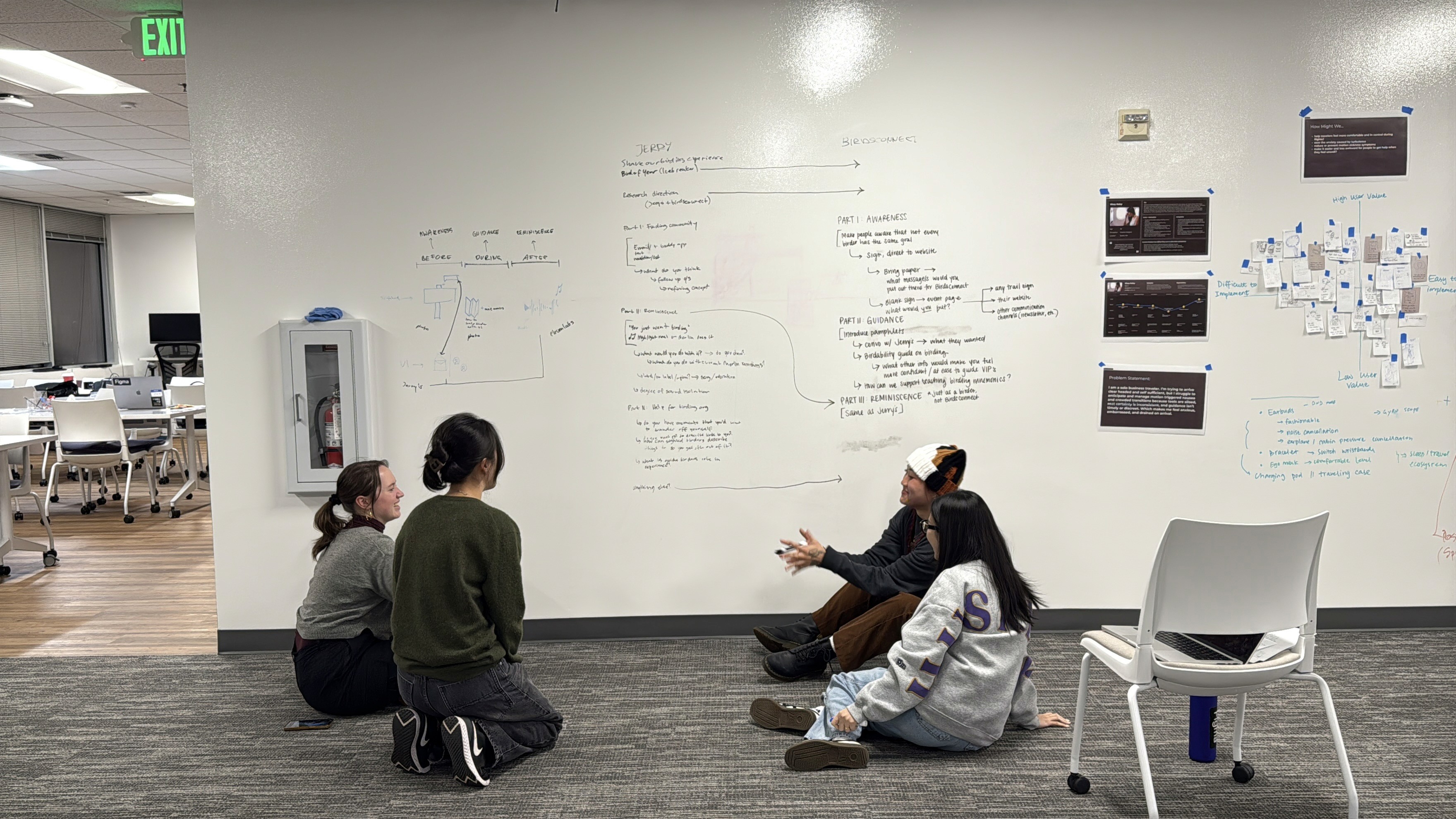
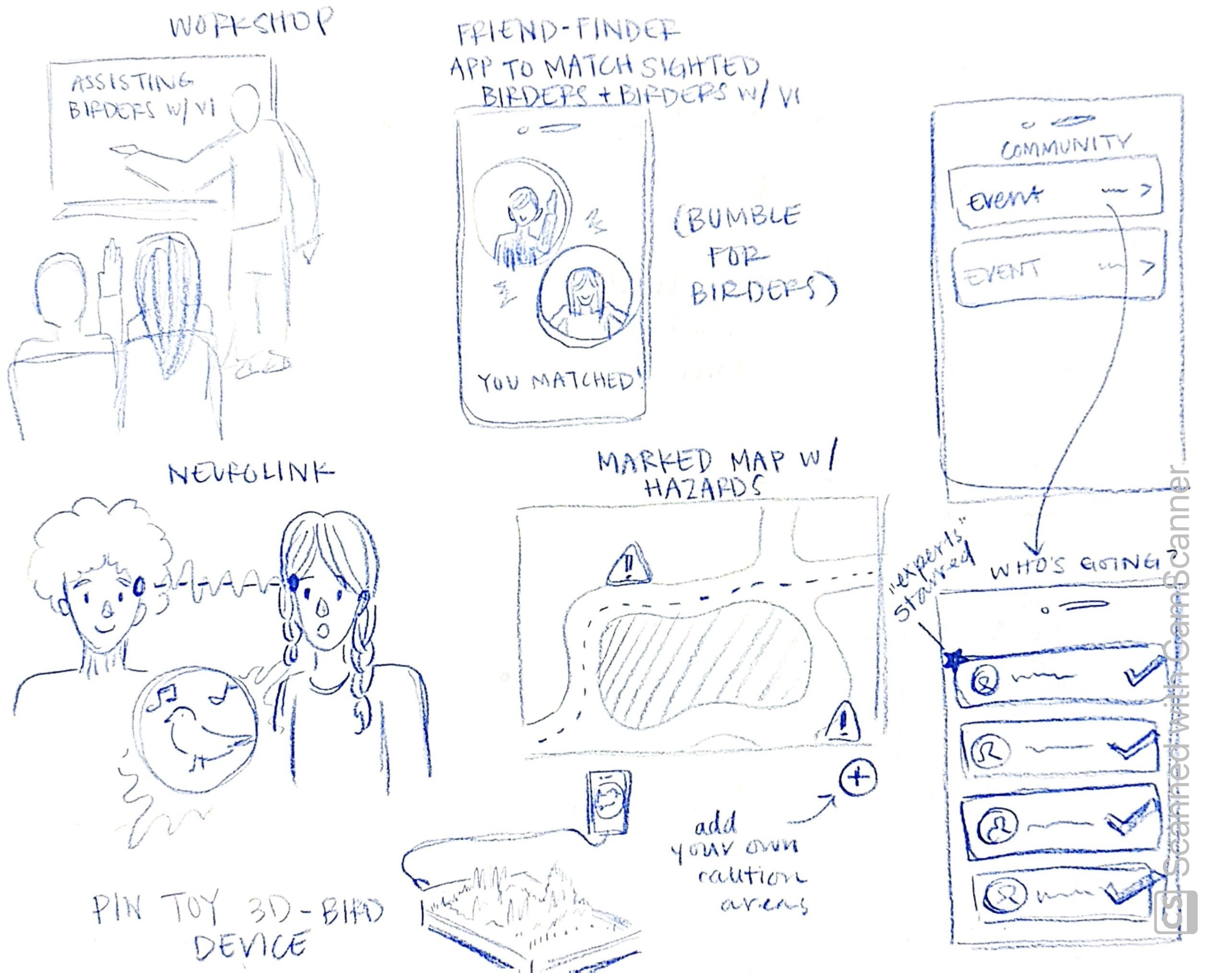
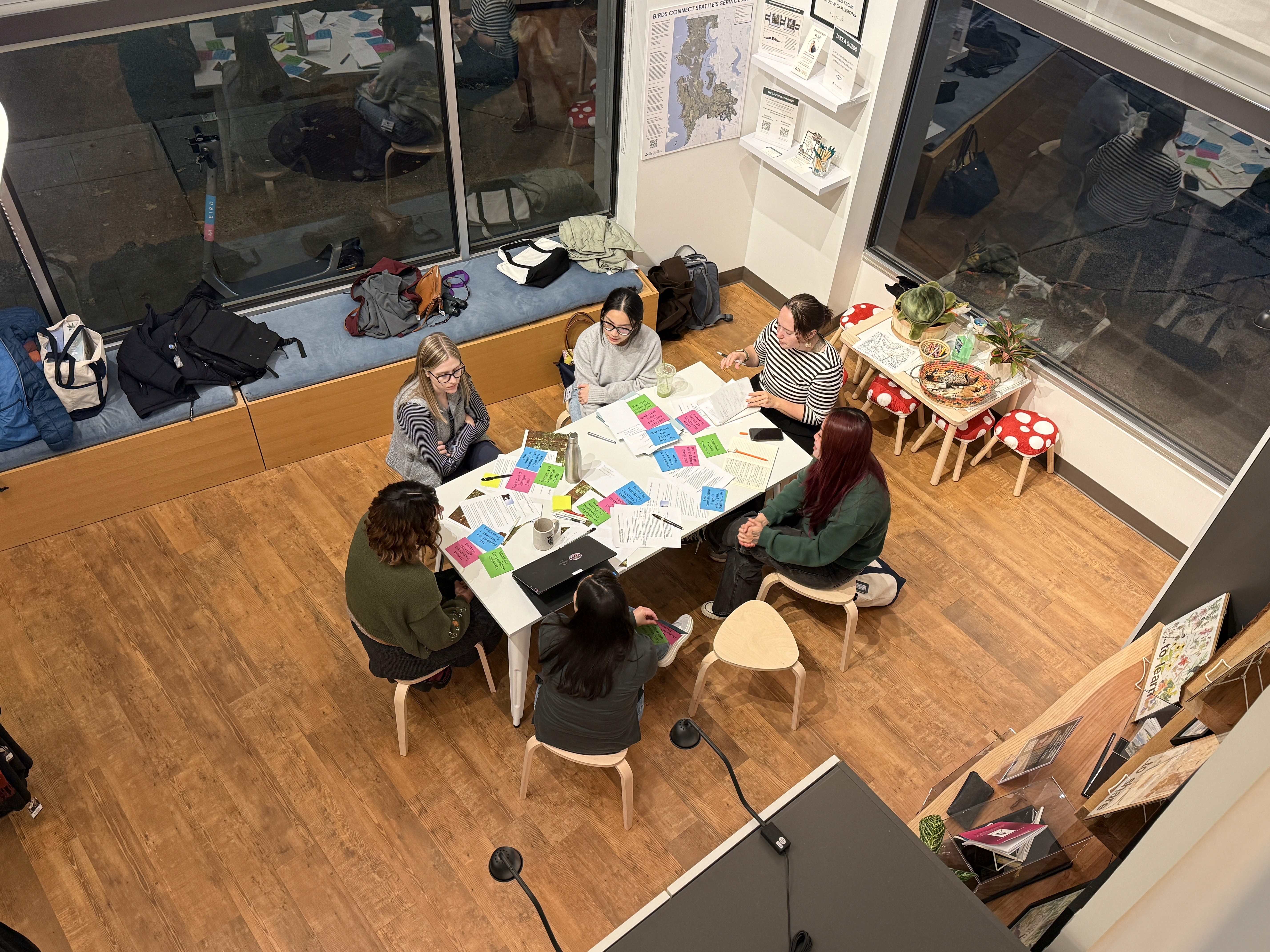
Based on insights from generative research, we planned two co-design sessions. We also developed initial sketches and prototypes to facilitate discussion and feedback during the sessions.
Michael Carter craft strategic design
Evaluative Research/ Co-Design

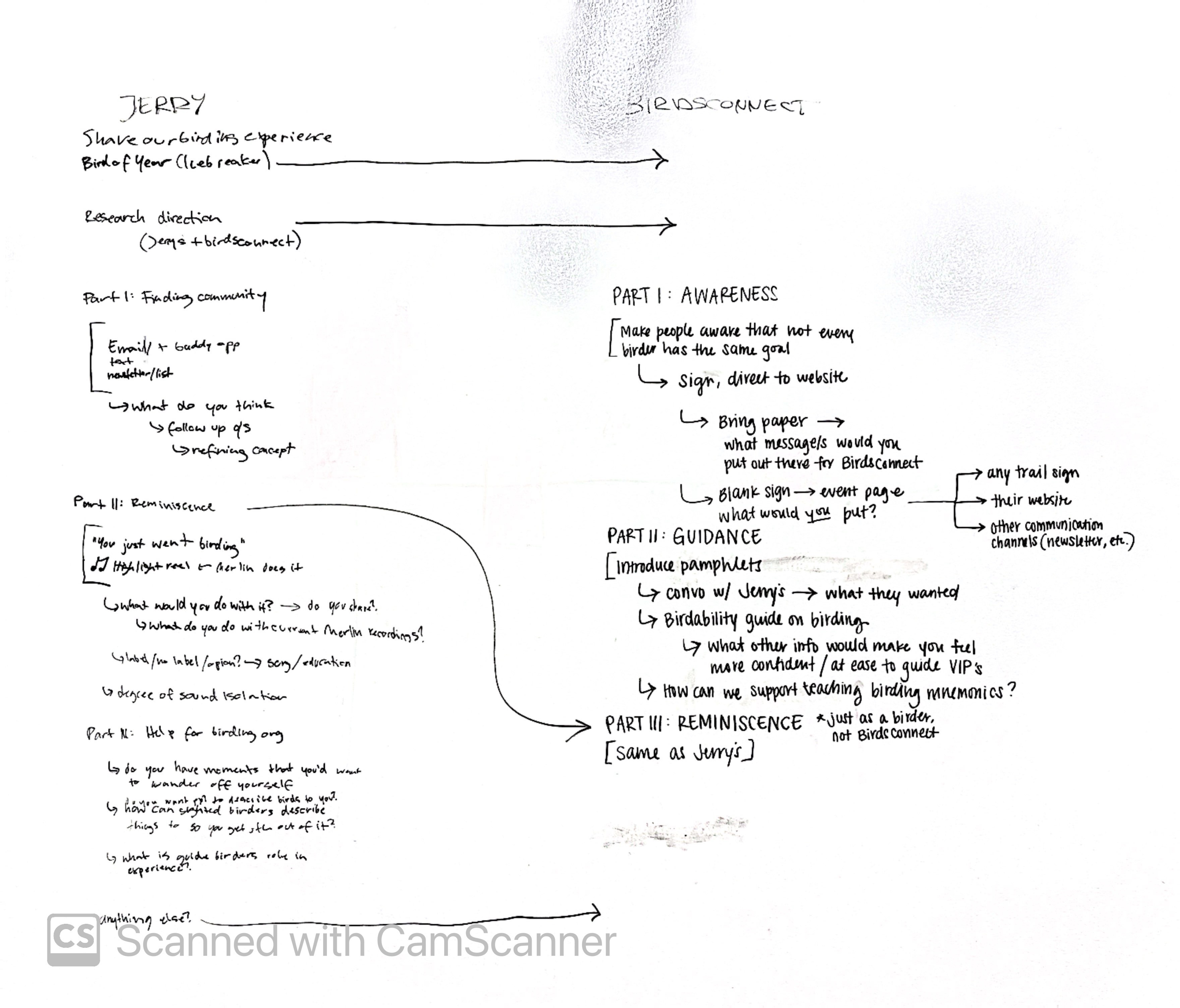
Co-Design and User Testing

We divided the sessions into three parts: Part I: Awareness, Part II: Guidance, and Part II: Reminiscence.

  1. Prototype + Solutions

We tested one early-stage prototype during the workshop and developed two additional solution concepts based on insights from the co-design session.

Michael Carter craft strategic design
Prototype

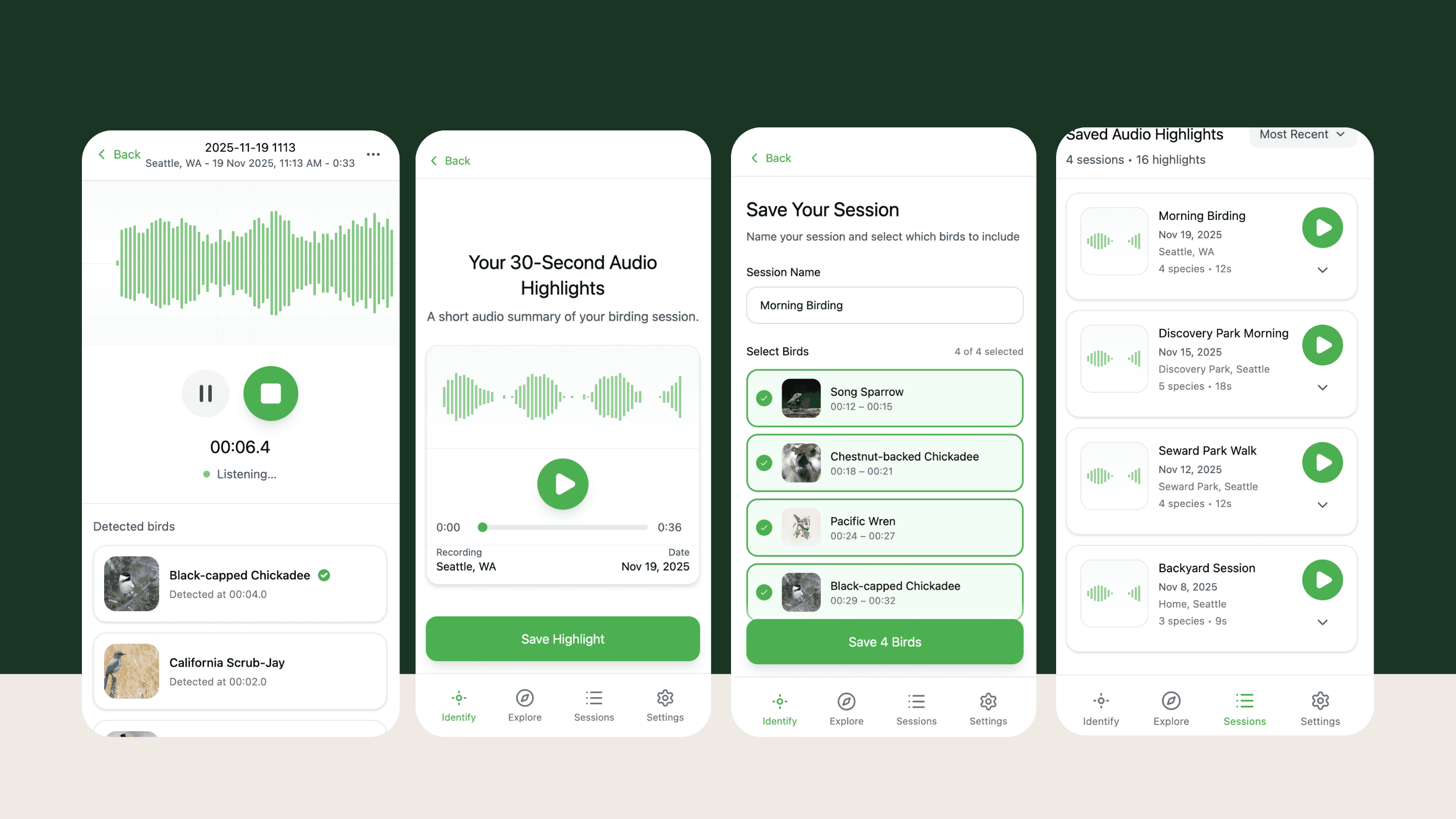
AI-based Audio Highlights on Merlin

AI-based Audio Highlights on Merlin

By compiling audio highlights of bird songs, our solution builds on Merlin’s existing workflow—highlighting a birding by ear perspective, and the learning and beauty that comes with fully focusing on sound.

Michael Carter craft strategic design
User Testing

"Hope this actually works in Merlin."

User testing revealed strong enthusiasm for the audio highlights prototype, with participants describing it as joyful, intuitive, and easy to use. Jay (SME, VI) saw potential for the feature to serve not only as a bird identification aid but also as a new listing and bird call education tool, highlighting an opportunity for Merlin to support more inclusive and exploratory birding experiences.

Additional Solution 1

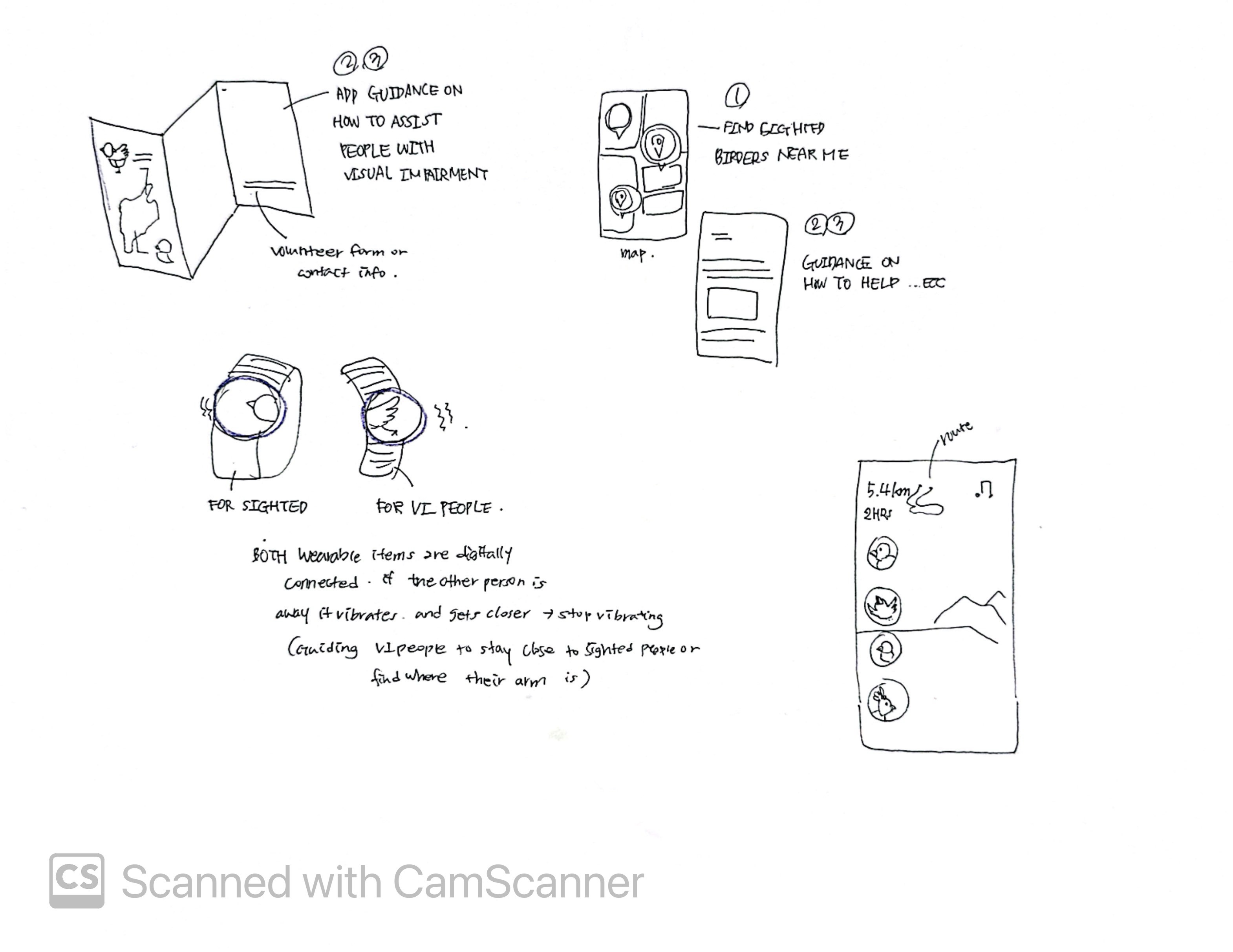
Leaders Training

Leaders Training

We shared Jay’s insights with Birds Connect Seattle, recommending that they adapt their leader training to include scenarios specific to guiding birders with visual impairments.

Additional Solution 2

Find birders near you

Find birders near you

Jay showed strong interest in our “Bumble for Birders” concept (inspired by the friend-making app Bumble). He shared that he feels comfortable sharing his profile and wants to connect with others based on birding expertise and location.

Additional Solution 3

Accessible Trails

Accessible Trails

Jay stressed the need for more accessible trails with stable surfaces, clear signage, and good railings to ensure safe and inclusive participation for everyone. Based on his feedback, the organization reviewed its website’s trail accessibility information and discovered that key details were buried at the bottom, making them easy to overlook.

What's next

Reach out to Merlin

In parallel with refining our audio reels prototype, we intend to contact researchers at the Cornell Lab of Ornithology’s Merlin team to explore potential collaboration opportunities and align our design insights with their accessibility initiatives.

This project was a challenging yet rewarding experience that emphasized the importance of teamwork and communication. As a long-term project, we had to continuously align on design direction and make compromises to balance user needs with technical constraints.


Open discussions and A/B testing helped us refine our choices and find common ground. I learned the value of flexibility and collaboration, ensuring that our decisions remained focused on creating a user-centered, impactful design while fostering a productive team dynamic.

BCS Website Modifications

We proposed edits to the Birds Connect Seattle website to improve the visibility and clarity of accessibility information. Our next step is to follow up with BCS to support and evaluate the implementation of these changes.

This project was a challenging yet rewarding experience that emphasized the importance of teamwork and communication. As a long-term project, we had to continuously align on design direction and make compromises to balance user needs with technical constraints.


Open discussions and A/B testing helped us refine our choices and find common ground. I learned the value of flexibility and collaboration, ensuring that our decisions remained focused on creating a user-centered, impactful design while fostering a productive team dynamic.

Takeaway

Through this project, I learned the importance of synthesizing research findings across generative and evaluative phases using affinity mapping. The experience reinforced the value of an iterative, structured approach to creating thoughtful, user-centered designs. I am also grateful to the Birds Connect Seattle members and interview participants who shared their stories and supported our research. ❤️

This project was a challenging yet rewarding experience that emphasized the importance of teamwork and communication. As a long-term project, we had to continuously align on design direction and make compromises to balance user needs with technical constraints.


Open discussions and A/B testing helped us refine our choices and find common ground. I learned the value of flexibility and collaboration, ensuring that our decisions remained focused on creating a user-centered, impactful design while fostering a productive team dynamic.